




Deploying a POS System on AWS: Architecture for 99.99% Uptime
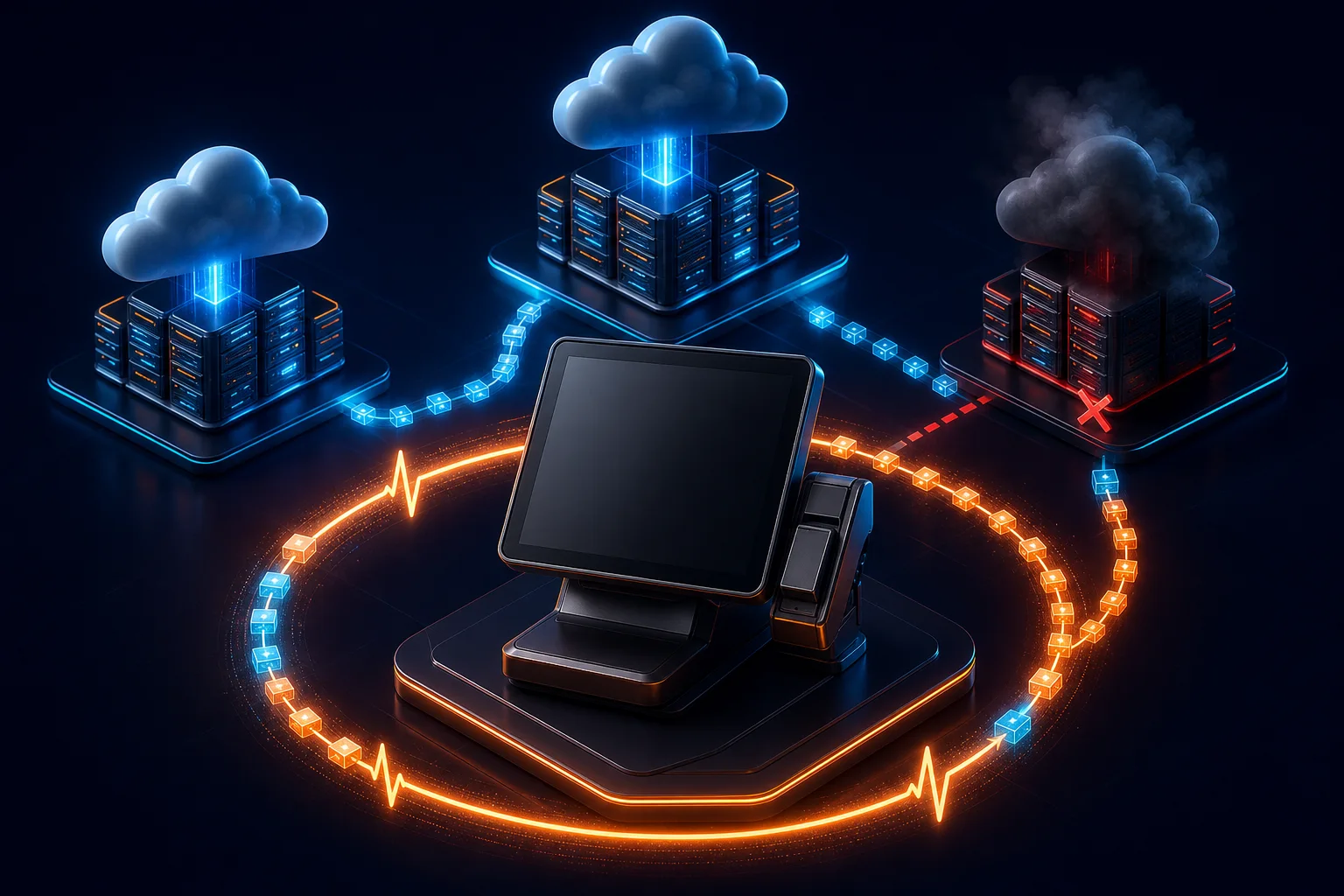
The AWS architecture patterns behind a POS platform that stays up during peak retail hours — multi-AZ deployment, database failover, and graceful degradation.
A POS system going down during peak shopping hours isn't a minor incident — it's a direct, immediate revenue loss with customers watching the till freeze in real time. Deploying POS infrastructure on AWS to meet a genuine 99.99% uptime target requires specific architectural decisions well beyond "put it on EC2 and hope."
Multi-AZ is the baseline, not the upgrade
A single-AZ deployment has a hard ceiling on achievable uptime, because an AZ-level outage — rare but real — takes the entire platform down with it. We deploy application servers across at least two Availability Zones behind an Application Load Balancer, and use Multi-AZ RDS deployments so a database failover happens automatically within seconds rather than requiring manual intervention during an outage.
Auto-scaling for predictable peak load
Retail traffic has extremely predictable peaks — weekend afternoons, festival seasons, lunch rushes for food service. Auto-scaling groups configured with both reactive scaling (based on CPU or request count) and scheduled scaling (anticipating known peak windows) keep the platform responsive without over-provisioning capacity that sits idle most of the week.
Graceful degradation over hard failure
Even a well-architected AWS deployment can have a bad moment — the goal is designing the system so a backend hiccup degrades gracefully rather than failing hard. Combined with the offline-first terminal architecture, a brief backend blip means terminals queue transactions locally and sync when connectivity returns, rather than blocking checkout entirely.
Monitoring that catches problems before customers do
Uptime targets are only meaningful if you detect degradation before customers report it. We set up CloudWatch alarms on latency percentiles (not just error rates — a slow checkout is nearly as bad as a failed one) and synthetic transaction monitoring that simulates a real checkout flow every few minutes from outside the infrastructure.
Frequently asked questions
Is 99.99% uptime realistic for a mid-sized retail business on AWS?
Yes, with the right architecture — multi-AZ deployment, automated database failover and proper monitoring get most well-built systems there. 99.99% allows for roughly 52 minutes of downtime per year, which is achievable without needing the most expensive multi-region setup most businesses don't actually need.
What's the difference between multi-AZ and multi-region deployment?
Multi-AZ spreads infrastructure across physically separate data centres within one AWS region, protecting against a single data centre failure — sufficient for the vast majority of businesses. Multi-region goes further, protecting against an entire region going down, which is a much higher cost for a failure mode that's extremely rare.
The WebSool take
We architect and deploy POS and retail infrastructure on AWS with multi-AZ resilience, predictive auto-scaling and real synthetic monitoring — not just a single EC2 instance and a prayer. If uptime during peak hours is business-critical for you, that's exactly the problem we solve.